
VPS Hosting: A Complete Guide to Virtual Private Servers and Their Benefits
Introduction
In today’s digital era, having a reliable and high-performance hosting solution is essential for businesses, developers, and website owners. As websites and online applications grow, basic hosting solutions may not provide enough resources, speed, and flexibility.
Many beginners start with shared hosting because it is affordable and easy to use. However, when a website receives more visitors or requires better performance, upgrading to a more powerful hosting solution becomes necessary.
This is where VPS Hosting (Virtual Private Server Hosting) becomes an excellent choice. VPS hosting provides better speed, security, control, and scalability compared to shared hosting while being more affordable than a dedicated server.
In this blog, we will understand what VPS hosting is, how it works, its advantages, different types, uses, and why businesses prefer VPS hosting for their online needs.
What Is VPS Hosting?
VPS stands for Virtual Private Server. VPS hosting is a hosting service where a physical server is divided into multiple virtual servers using virtualization technology.
Each virtual server works independently and provides dedicated resources to users.
A VPS includes:
- Dedicated RAM
- Dedicated CPU resources
- Storage space
- Private operating system
- Dedicated IP address
- Custom server settings
Unlike shared hosting, where multiple websites share the same server resources, VPS hosting provides a more stable and isolated environment.
You can think of VPS hosting like owning a private apartment inside a large building. Although multiple apartments exist in the same building, each apartment has its own space and privacy.
How Does VPS Hosting Work?
VPS hosting works with the help of virtualization technology.
A powerful physical server is divided into multiple virtual servers using a software layer called a hypervisor.
The process works as follows:
- A physical server contains powerful hardware resources.
- Virtualization software divides the server into multiple virtual environments.
- Each VPS receives a specific amount of resources.
- Users can manage their own virtual server according to their requirements.
Each VPS operates independently, which means activities on one virtual server usually do not affect other users on the same physical server.
Types of VPS Hosting
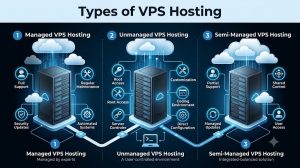
There are two main types of VPS hosting:
1. Managed VPS Hosting
Managed VPS hosting is suitable for users who do not want to handle technical server management.
The hosting provider takes care of:
- Server maintenance
- Security updates
- Software installation
- Backup management
- Technical support
This option is ideal for businesses and beginners who want the benefits of VPS hosting without managing complicated server tasks.
2. Unmanaged VPS Hosting
Unmanaged VPS hosting provides complete control to users.
Users are responsible for:
- Server configuration
- Software installation
- Security settings
- Updates and maintenance
This option is commonly preferred by developers and experienced users who need complete customization.
Benefits of VPS Hosting
1. Improved Performance
Performance is one of the biggest advantages of VPS hosting.
Since resources are allocated separately, websites and applications can run faster and more efficiently.
Benefits include:
- Faster loading speed
- Better website performance
- Smooth application operation
- Ability to handle more traffic
A faster website also improves user experience and can positively impact search engine rankings.
2. Dedicated Resources
In shared hosting, multiple websites use the same server resources. If another website consumes too many resources, your website performance may suffer.
VPS hosting provides dedicated resources such as:
- RAM
- CPU power
- Storage
This ensures stable performance even during periods of high traffic.
3. Better Security
Online security is extremely important for businesses and websites.
VPS hosting provides better security compared to shared hosting because each virtual server operates separately.
Security advantages include:
- Isolated server environment
- Custom firewall configuration
- Better access control
- Reduced security risks
Users also get more control over security settings according to their needs.
4. Complete Control and Customization
VPS hosting provides more control over the server environment.
Users can customize their VPS by:
- Installing required applications
- Selecting operating systems
- Configuring server settings
- Managing resources
This flexibility makes VPS hosting popular among developers and businesses.
5. Cost-Effective Solution
Dedicated servers provide maximum performance but can be expensive.
VPS hosting offers many features of dedicated servers at a lower cost.
It is a suitable option for:
- Small businesses
- Startups
- Growing websites
- Developers
- Online professionals
Common Uses of VPS Hosting
VPS hosting is used for various purposes across different industries.
1. Website Hosting
Many businesses use VPS hosting for websites that require more resources than shared hosting can provide.
Examples include:
- E-commerce websites
- Corporate websites
- News websites
- High-traffic blogs
VPS hosting helps these websites maintain better speed and reliability.
2. Application Hosting
Developers often use VPS hosting to run applications and software.
A VPS provides a reliable environment for:
- Web applications
- APIs
- Database management systems
- Testing environments
Developers can customize the server according to application requirements.
3. Online Stores
E-commerce websites require fast performance and strong security because they handle customer information and online transactions.
VPS hosting helps online stores by providing:
- Faster page loading
- Better security
- Reliable performance
- Scalability during high sales periods
4. Business Websites
Professional businesses need reliable hosting to maintain their online presence.
VPS hosting helps companies manage:
- Company websites
- Customer portals
- Business applications
- Online services
VPS Hosting vs Shared Hosting
| Feature | Shared Hosting | VPS Hosting |
|---|---|---|
| Resources | Shared among users | Dedicated resources |
| Performance | Limited | Higher performance |
| Security | Basic | More secure |
| Customization | Limited | High customization |
| Scalability | Limited | Easy upgrade options |
| Cost | Lower | Medium |
Shared hosting is suitable for small websites, while VPS hosting is better for growing websites and professional applications.
VPS Hosting vs Dedicated Server
A dedicated server provides an entire physical server to one user. It offers maximum performance but comes with a higher cost.
VPS hosting provides:
- Dedicated resources
- Better affordability
- Flexible customization
- Easy scalability
For many businesses, VPS hosting offers the perfect balance between cost and performance.
Important Factors Before Choosing VPS Hosting
Before purchasing VPS hosting, consider these important factors:
1. Server Resources
Check available:
- RAM
- CPU cores
- Storage capacity
- Bandwidth
Choose resources according to your website or application requirements.
2. Security Features
A good VPS provider should offer:
- Firewall protection
- Backup solutions
- Security monitoring
- Regular updates
3. Customer Support
Technical support is important because server issues can affect your website performance.
Choose a provider that offers reliable customer assistance.
4. Scalability Options
Your hosting requirements may increase as your website grows.
Choose VPS hosting that allows easy upgrades of:
- Storage
- RAM
- CPU resources
Advantages of VPS Hosting for Businesses
Businesses prefer VPS hosting because it provides:
- Reliable website performance
- Better security
- More control
- Professional hosting environment
- Room for future growth
A strong hosting foundation helps businesses provide better services to their customers.
Future of VPS Hosting

The demand for VPS hosting continues to grow as more businesses move online.
Modern websites and applications require:
- High-speed performance
- Secure infrastructure
- Flexible resources
- Reliable uptime
VPS hosting continues to be a popular choice because it combines affordability with powerful server capabilities.
As technology develops, VPS solutions are becoming more advanced, making them suitable for businesses of all sizes.
Conclusion
VPS Hosting is a powerful and flexible hosting solution that provides better performance, security, and control compared to traditional shared hosting.
It is an ideal choice for businesses, developers, and website owners who need more resources without paying the high cost of a dedicated server.
With dedicated resources, customization options, and scalability, VPS hosting provides a strong foundation for websites and applications.
Whether you are running an online store, business website, or professional application, VPS hosting can help you achieve better performance and long-term growth.